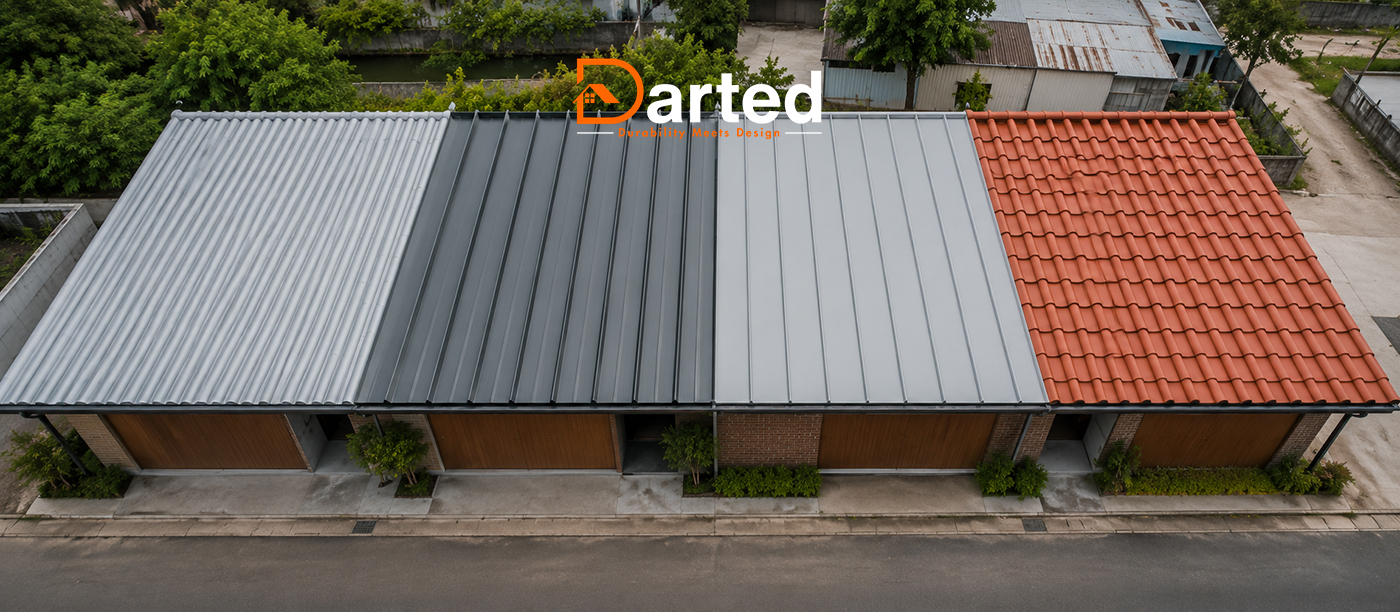
Most people picture one thing when they hear “metal roof”, a shiny, wavy sheet on a shed. But that’s just one profile out of half a dozen options, and the profile you choose affects everything from water drainage to how long the roof actually lasts.
This guide walks through each major metal roofing sheet profile used in India today, what it looks like, and where it performs best. Think of it as a visual reference you can point to when a supplier starts throwing profile names at you.
In Short
Metal roofing sheets come in several distinct profiles; corrugated, trapezoidal, standing seam, and stone coated tile-profile each shaped differently to handle water flow, structural load, and appearance in its own way. Picking the right profile matters as much as picking the right material.
Corrugated Profile
What it looks like: Continuous, rounded waves running the length of the sheet, the most recognizable metal roofing profile in India.
Where it’s used: Sheds, warehouses, budget residential roofs, boundary walls.
Why it’s popular: It’s the cheapest profile to manufacture and install, and the rounded waves add strength against bending compared to a flat sheet.
Where it falls short: The rounded shape traps less water per rib than trapezoidal profiles, and screws are more visible, which can look less finished on a home.
Trapezoidal Profile
What it looks like: Sharp, box-shaped ribs instead of rounded waves like a series of flattened trapezoids running across the sheet.
Where it’s used: Industrial sheds, factories, commercial buildings, and larger residential roofs needing extra strength.
Why it’s popular: The rigid rib shape handles wind uplift and structural load noticeably better than corrugated sheets, which is why you’ll see it on larger spans.
Expert tip: If your roof spans a wide area without much intermediate support, ask specifically for trapezoidal profile sheets. Corrugated sheets can sag or oil-can over long, unsupported spans.
Standing Seam Profile
What it looks like: Flat panels joined by raised, vertical seams where adjacent sheets interlock no visible screws on the roof surface.
Where it’s used: Premium residential and commercial buildings where a clean, modern look matters, along with strong waterproofing needs.
Why it’s popular: Because fasteners are hidden inside the seam rather than punched through the sheet face, standing seam roofs have fewer leak points and generally last longer than exposed-fastener profiles.
Common mistake: Some contractors install standing seam panels using the same technique as corrugated sheets, missing the concealed clip system entirely. This defeats the entire point of the profile. Make sure your installer has specific standing seam experience.
Stone Coated Tile Profile
What it looks like: Shaped to mimic traditional clay or slate roof tiles, with a textured stone-chip coating over a steel base from a distance, most people assume it’s real tile.
Where it’s used: Residential homes where appearance is a priority, especially replacing older clay tile or asbestos roofs.
Why it’s popular: You get the classic tiled aesthetic without the weight, fragility, or high maintenance of real clay, and it typically outlasts both corrugated and trapezoidal metal profiles.
Where it falls short: It costs more upfront than basic profiles, and not every supplier offers the same coating quality, so sample-checking before you buy really matters.
Profile Comparison at a Glance
| Profile | Look | Best For | Relative Cost | Typical Lifespan |
| Corrugated | Rounded waves | Sheds, budget builds | Low | 10-15 years |
| Trapezoidal | Sharp box ribs | Industrial, wide-span roofs | Low-Moderate | 15-20 years |
| Standing Seam | Flat, hidden seams | Premium residential/commercial | High | 30-45 years |
| Stone Coated Tile | Textured tile look | Residential homes | Moderate-High | 30-50 years |
How to Pick Based on What You See
If you’re touring a supplier’s showroom or scrolling through product photos, use this quick check:
- Rounded waves → corrugated, budget-friendly, functional look
- Sharp geometric ribs → trapezoidal, built for strength and span
- Flat with vertical seam lines, no visible screws → standing seam, premium and clean
Textured, tile-like surface with color variation → stone coated, residential and decorative
Frequently Asked Questions
What is the most common metal roofing sheet profile in India?
Corrugated profile sheets remain the most widely used, mainly because of their lower cost and long manufacturing history in the Indian construction market. They’re common on sheds, warehouses, and budget residential builds. However, trapezoidal and stone coated tile profiles have been gaining ground steadily as buyers prioritize durability and appearance over the lowest possible upfront cost.
Which metal roofing profile has the fewest leaks?
Standing seam profiles generally have the fewest leak points because their fasteners are concealed within the interlocking seam rather than punched through the sheet’s visible surface. Exposed-fastener profiles like corrugated and trapezoidal sheets rely on gasketed screws, which can loosen or degrade over time and become a common leak source if not properly maintained.
Can I mix roofing profiles on the same building?
It’s technically possible but generally not recommended for the main roof surface, since different profiles have different overlap and fastening requirements. Mixing is more common between the main roof and secondary structures, like a car porch or extension, where a different profile might suit the smaller span or budget better.
Which profile looks the most like a traditional tiled roof?
Stone coated tile profile sheets are specifically designed to replicate the look of clay or slate tiles, right down to the shadow lines and color variation of the stone coating. From street level, most people can’t distinguish it from genuine tile roofing, which is exactly why it’s become popular for homeowners replacing aging clay or asbestos roofs.
Still Deciding on a Profile?
Photos only tell you so much the right profile depends on your roof’s span, slope, and climate exposure. Reach out for a free assessment, and we’ll help you match the profile to your actual roof, not just the one that photographs best.