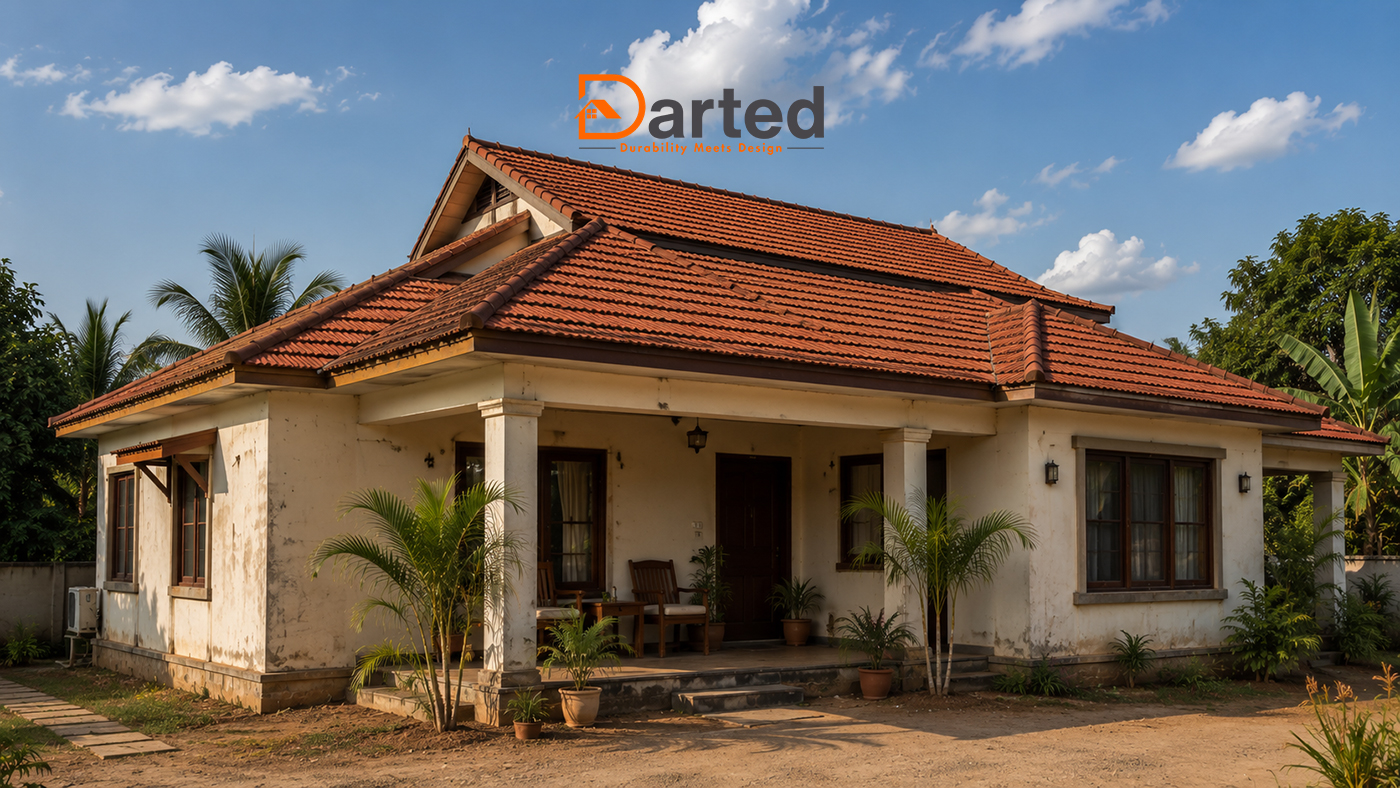
If you’ve ever stood on a roof after a bad monsoon season, you know the drill. Cracked clay tiles. Rusted GI sheets. A leak you can’t quite trace back to its source. It’s frustrating, and it’s expensive to keep patching up.
That’s exactly why more homeowners across India – from Kerala’s coast to Rajasthan’s dry heat; are switching to stone coated steel roofing sheets. They give you the classic tiled look people love, without the weight, the cracking, or the constant upkeep clay demands.
In this guide, I’ll walk you through what stone coated steel roofing actually is, how it holds up in Indian conditions, what it costs, and how to pick the right one for your home. No sales pitch, just what 20 years of working with roofs has taught me.
Table of Contents
- What Is Stone Coated Steel Roofing?
- Why It Works So Well in India
- Stone Coated Steel vs Other Roofing Materials
- Lifespan, Warranty & Durability
- Cost Factors
- Installation: What to Expect
- Maintenance Basics
- Common Buyer Mistakes
- Choosing the Right Supplier
- FAQs
What Is Stone Coated Steel Roofing?
Stone coated steel roofing is a steel base panel coated in acrylic resin and natural stone chips, giving you the look of clay or slate tiles with the strength, light weight, and weather resistance of steel.
Here’s how it’s built. Manufacturers start with a galvanized or galvalume steel core, the same corrosion-resistant steel used in premium metal roofing. That core gets stamped into a tile, shake, or shingle profile, then coated with a layer of acrylic resin. Natural stone granules get pressed into that resin, and a clear overglaze locks everything in place.
The result is a sheet that looks like terracotta tile from the street but weighs a fraction as much usually under 5 kg per square meter, compared to 40-50 kg for real clay tiles.
Expert tip: Don’t judge a sheet by photos alone. Ask your supplier for a physical sample panel. The stone coating quality varies a lot between manufacturers, and you’ll feel the difference in your hands.
Why Stone Coated Steel Works So Well in India
India isn’t one climate it’s five or six stacked on top of each other. That’s exactly where stone coated steel earns its keep.
Monsoon and waterproofing. The interlocking panel design sheds water fast, and the steel core won’t absorb moisture the way clay or concrete tiles can. That matters in states like Kerala and coastal Karnataka, where roofs face months of sustained rain.
Heat and UV resistance. In Rajasthan, Haryana, and much of Uttar Pradesh, roofs bake under direct sun for eight-plus hours a day. The stone coating reflects a good portion of that heat rather than absorbing it like dark asphalt shingles do, which helps keep indoor temperatures a few degrees cooler.
Wind resistance. Coastal regions and cyclone-prone belts need roofing that won’t peel off in a storm. Properly fastened stone coated steel panels are rated to handle high wind uplift far better than loose clay tiles, which can lift and shatter.
Common mistake: Buyers in hot, dry regions sometimes skip the insulated underlayment to save money. Don’t. Without it, you lose most of the thermal benefit, especially in North Indian summers.
Stone Coated Steel vs Other Roofing Materials
| Feature | Stone Coated Steel | Clay Tiles | Asbestos Sheets | Plain GI Sheets |
| Weight | Light (~5 kg/m²) | Heavy (~40-50 kg/m²) | Moderate | Light |
| Lifespan | 30-50 years | 25-40 years (crack-prone) | 15-20 years | 10-15 years |
| Cost per sq ft | Moderate-high | Moderate | Low | Low |
| Earthquake safety | Good (lightweight) | Poor (heavy, brittle) | Fair | Good |
| Maintenance | Low | Moderate | High (health risk) | High (rust) |
| Look | Tile/shake appearance | Traditional tile | Industrial | Industrial |
Asbestos sheets are still common in budget builds, but most contractors are steering clients away from them today given the well-documented health risks tied to asbestos fibers. If you’re weighing that option, it’s worth a serious second look.
Lifespan, Warranty & Durability
Stone coated steel roofing typically lasts 30 to 50 years, backed by manufacturer warranties of 20 to 40 years, depending on coating quality and installation.
What actually determines whether you get 30 years or 50? Three things: the thickness of the steel core (look for 0.4mm-0.5mm gauge for residential use), the quality of the stone coating adhesion, and whether the installer used the correct fasteners and flashing.
A roof installed with mismatched screws or skipped sealant will fail early no matter how good the sheet itself is. I’ve seen five-year-old roofs with leak damage purely from installation shortcuts, right next to 25-year-old roofs from the same manufacturer performing perfectly.
Cost Factors
Stone coated steel roofing sheets in India generally cost more per square foot than plain GI sheets but less than premium clay tiling, with price driven by steel gauge, coating quality, profile complexity, and transport distance.
A few things move the price up or down:
- Steel gauge: thicker steel costs more but lasts longer
- Coating grade: better stone-chip adhesion resists chipping and fading
- Profile complexity: tile-look profiles cost more to stamp than simple corrugated sheets
- Transport: freight adds up fast if you’re far from the manufacturing hub, which matters for buyers in Rajasthan or upper UP
For a detailed cost breakdown by state and use case, see our full pricing guide.
Installation: What to Expect
Installation typically takes 2 to 5 days for an average home, depending on roof size and complexity. The basic process: purlins or battens get fixed to the roof structure first, then panels are laid from the eave upward with proper overlap, and ridge caps and flashing seal the joints.
Expert recommendation: Always confirm your installer follows the manufacturer’s fastening spacing exactly. Cutting corners here is the single biggest cause of early leaks.
Maintenance Basics
Stone coated steel needs far less upkeep than clay or asbestos, but it’s not zero-maintenance. Twice a year ideally before and after monsoon clear debris from valleys and gutters, check for loose fasteners, and look for any chipped coating that might expose bare steel to rust.
Common Buyer Mistakes
- Choosing based on price alone and skipping thickness/gauge checks
- Not verifying wind and load ratings for their specific region
- Hiring installers with no stone coated steel experience
- Skipping insulation in hot climates to cut costs
- Not asking for warranty terms in writing
Choosing the Right Supplier
Look for a manufacturer who can show you: actual gauge specifications (not just “heavy duty”), a written warranty, real installation references in your region, and physical samples. A supplier who dodges these questions is telling you something.
Frequently Asked Questions
What is stone coated steel roofing made of?
It’s a galvanized or galvalume steel base panel coated with acrylic resin and natural stone chips, finished with a protective overglaze. The steel core provides structural strength and weather resistance, while the stone coating gives it the textured, tiled look of clay or slate. This combination is why it performs well across different Indian climates while staying lightweight compared to traditional tile roofing.
Is stone coated steel roofing good for hot climates like Rajasthan?
Yes, when installed with proper insulation. The stone coating reflects a significant portion of solar heat compared to dark, uncoated metal roofing, which helps reduce indoor heat buildup. However, in extreme heat zones like Rajasthan or Haryana, pairing the roofing with an insulated underlayment makes a noticeable difference in comfort and shouldn’t be skipped to save cost.
How long does stone coated steel roofing last?
Most quality stone coated steel roofing lasts between 30 and 50 years, with manufacturer warranties typically ranging from 20 to 40 years. Actual lifespan depends heavily on steel gauge, coating quality, and correct installation. Roofs installed with proper fastening and flashing tend to reach the higher end of that range, while poor installation can cause failures far earlier.
Is stone coated steel roofing more expensive than clay tiles?
It’s typically comparable to or slightly higher than clay tiles upfront, but often works out cheaper over the roof’s lifetime. Clay tiles are heavier, more prone to cracking, and usually need more structural support and repair over time. Stone coated steel’s lower maintenance needs and longer effective lifespan often offset the higher initial cost.
Can stone coated steel roofing handle heavy monsoon rain?
Yes. The interlocking panel design is built to shed water quickly, and the steel core doesn’t absorb moisture the way porous materials like clay or concrete can. Proper installation with correctly sealed overlaps and flashing is essential, though, even the best roofing sheet will leak if it’s installed with gaps or incorrect overlap spacing.
Does stone coated steel roofing rust?
Quality stone coated steel starts with a galvanized or galvalume core, both of which are specifically designed to resist corrosion. As long as the stone coating stays intact and isn’t chipped or scratched down to bare metal, rust risk is very low. This is why periodic inspection for coating damage is worth doing, especially after storms or heavy debris impact.
Ready to Roof With Confidence?
Not sure which stone coated steel profile suits your home or region? Get a free site inspection and quote from our team, we’ll walk you through gauge, coating, and cost options specific to your climate, no obligation attached.