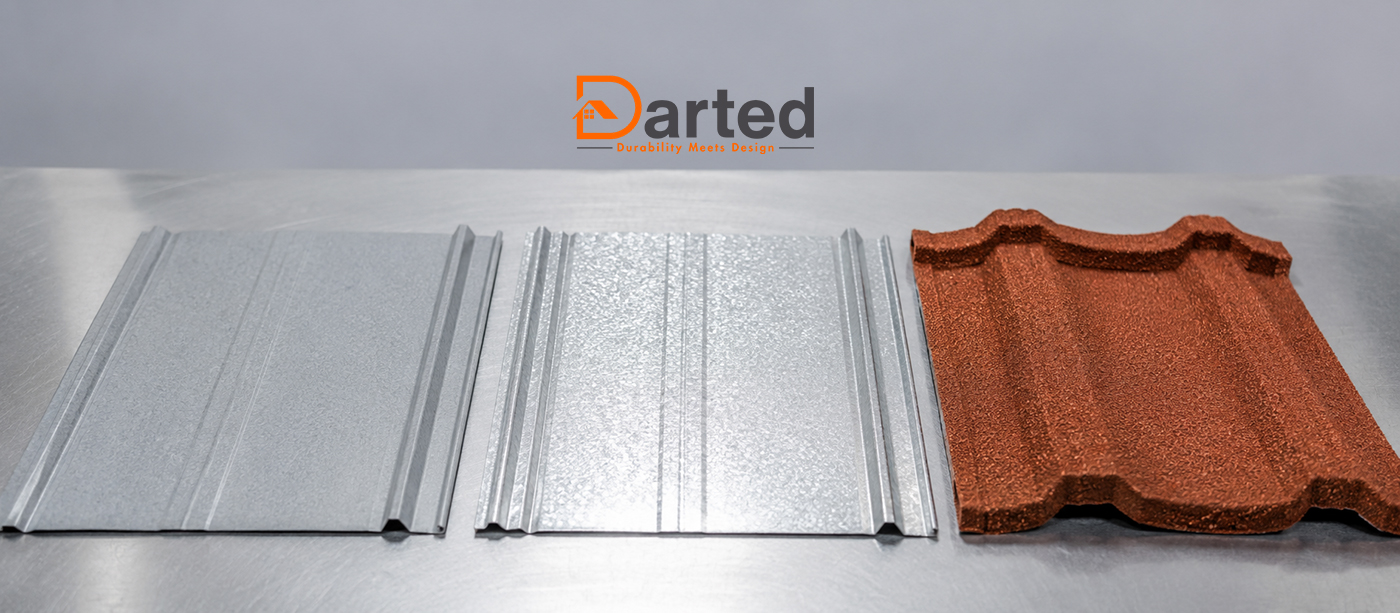
This is one of the questions I get asked most often on-site: “GI or GL, what’s actually the difference, and does it matter that much?” Short answer: yes, it matters, especially depending on where in India you’re building.
Both are coated steel sheets designed to resist rust, but the coating itself is different, and that difference shows up clearly over 10, 20, 30 years, particularly in humid coastal zones versus dry inland regions.
In Short
Galvanised (GI) sheets are coated with zinc, offering solid corrosion resistance at a lower cost, while galvalume (GL) sheets use a zinc-aluminum alloy coating that generally provides better long-term corrosion and heat resistance, especially in harsh or coastal climates, at a moderately higher price.
What Is Galvanised (GI) Roofing?
Galvanised steel sheets are coated in a layer of zinc through a hot-dip process. The zinc acts as a sacrificial barrier, it corrodes before the underlying steel does, protecting the structural integrity of the sheet for years.
Strengths: Lower cost, widely available, well understood by installers across India, and solid performance in moderate, non-coastal climates.
Weaknesses: The zinc coating corrodes faster in humid, salty, or heavily polluted environments. Cut edges and scratches are more vulnerable since the zinc barrier is thinner than galvalume’s alloy coating.
What Is Galvalume (GL) Roofing?
Galvalume sheets use a coating that’s roughly 55% aluminum, 43.5% zinc, and 1.5% silicon. This combination gives you the corrosion resistance of zinc along with the heat reflectivity and long-term durability of aluminum.
Strengths: Better corrosion resistance in aggressive environments, better heat reflectivity (useful in hot regions like Rajasthan and Haryana), and generally a longer service life than standard GI.
Weaknesses: Slightly higher cost, and it’s a bit less forgiving at cut edges, the aluminum content means the alloy doesn’t self-heal cut edges quite as effectively as pure zinc, so edge sealing during installation matters more.
Expert tip: If your installer isn’t specifically sealing or treating cut edges on galvalume sheets, ask why. This is the single most common installation shortcut that shortens galvalume’s lifespan.
Side-by-Side Comparison
| Feature | Galvanised (GI) | Galvalume (GL) |
| Coating material | Zinc | Zinc-aluminum-silicon alloy |
| Corrosion resistance | Good | Very good, especially long-term |
| Heat reflectivity | Moderate | Higher |
| Cost | Lower | Moderately higher |
| Best for | Moderate, inland climates | Coastal, industrial, high-heat regions |
| Cut-edge protection | Better (zinc self-heals cuts) | Requires careful edge sealing |
| Typical added lifespan vs GI | Baseline | Often 2-4x longer in harsh conditions |
Which One Should You Choose Based on Region?
Coastal areas (Kerala, coastal Karnataka, coastal Tamil Nadu, coastal Andhra Pradesh): Galvalume is generally the smarter long-term choice. Salt-laden air accelerates zinc corrosion in standard GI sheets significantly faster than inland regions.
Hot, dry regions (Rajasthan, Haryana, parts of Uttar Pradesh): Galvalume’s better heat reflectivity is a meaningful advantage here, helping reduce heat transfer into the building below.
Moderate inland climates: Standard GI performs perfectly well for most residential and light commercial use, and the cost savings can be worth it if you’re not dealing with coastal air or extreme heat.
Industrial and high-pollution zones: Galvalume again tends to hold up better against the combination of moisture and airborne chemical exposure common near factories.
Common Mistakes When Choosing Between GI and GL
- Assuming all “galvanized” or “coated” sheets are the same without checking coating specifications
- Choosing GI for a coastal home purely to save money, then facing early corrosion within 5-8 years
- Not sealing cut edges properly during galvalume installation
- Overlooking that galvalume needs slightly different fastener and sealant compatibility than standard GI
A Quick Way to Verify What You’re Actually Buying
Don’t just take a supplier’s word that a sheet is “GI” or “GL.” Ask for the coating specification sheet, which should state the coating composition and coating mass (grams per square meter, often written as GSM). A legitimate supplier will have this documentation ready without hesitation. Our stone coated roofing sheets are built on a galvalume core for exactly this reason.
Frequently Asked Questions
Is galvalume better than galvanised roofing?
For most purposes, galvalume offers better long-term corrosion resistance and heat reflectivity, making it a stronger choice for coastal or extreme-heat regions. However, galvanised sheets remain a solid, cost-effective option for moderate inland climates where the environmental stress on the coating is lower. The “better” choice really depends on your specific location and climate exposure.
Does galvalume roofing rust?
Galvalume is highly resistant to rust due to its zinc-aluminum-silicon alloy coating, but it isn’t entirely immune, especially if cut edges aren’t properly sealed during installation. Scratches or cuts that expose the underlying steel can become vulnerable points over time, which is why professional installation with proper edge treatment is important for galvalume roofing.
Which is cheaper, GI or GL roofing sheets?
Galvanised (GI) sheets are generally cheaper upfront compared to galvalume (GL) sheets, since the zinc coating process is less expensive than the zinc-aluminum-silicon alloy coating used in galvalume. However, when factoring in typical lifespan differences in harsh climates, galvalume can work out more cost-effective over the long run.
Can I use galvanised sheets near the coast?
You can, but standard galvanised sheets generally corrode faster in coastal environments due to salt-laden air accelerating zinc breakdown. If budget allows, galvalume or a coated product specifically rated for coastal or marine environments is a safer long-term investment for homes and buildings near the coast.
Still Weighing GI vs GL for Your Roof?
The right choice depends heavily on your exact location and building type, not a blanket rule. Request a free consultation, and we’ll help you compare options based on your specific climate and budget.