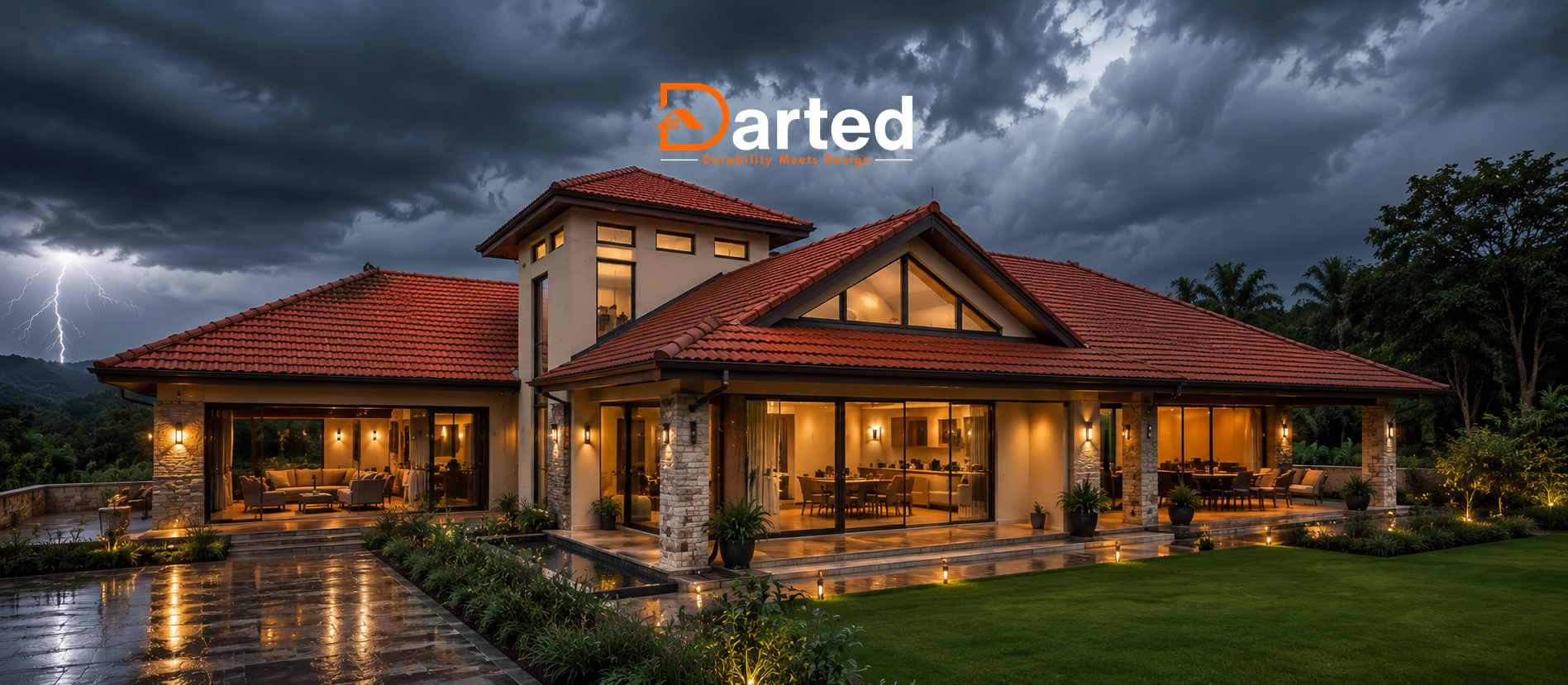
In the premium residential sector, a roof is often judged by its “curb appeal.” However, as climate volatility increases across India- from unseasonal hailstorms to high-velocity winds—architects are shifting their focus from pure aesthetics to structural resilience. Stone Coated Steel Roofing has emerged as the leading specification for professionals who refuse to compromise on safety.
1. The Interlocking Advantage Against High-Velocity Winds
Traditional roofing systems, such as clay tiles or standard metal sheets, often fail during high-wind events due to vertical fastening. When wind speeds increase, air pressure underneath the tiles creates an “uplift” force, popping nails and stripping the roof.
Stone Coated Steel Roofing solves this through a unique horizontal interlocking system. By fastening the panels into the side of the batten rather than the top, the system creates a monolithic structural skin. It is rated to withstand wind speeds that would otherwise devastate a traditional tiled roof, making it a critical choice for villas in coastal or high-altitude regions.
2. Fire Safety: A Non-Negotiable Spec
With the increasing complexity of modern home electrical systems and the use of indoor fireplaces in North India, fire safety is a primary concern. Unlike bitumen-based shingles or wooden shakes, stone coated steel is non-combustible. With a Class A fire rating, it acts as a firebreak, preventing external sparks from penetrating the building’s envelope. For architects, this specification provides a layer of liability protection and peace of mind for the client.
3. Resilience to Thermal Shock and Impact
Extreme temperature fluctuations can cause traditional materials like clay and concrete to become brittle and crack – a phenomenon known as thermal shock. Stone Coated Steel Roofing is engineered to expand and contract without losing structural integrity. Furthermore, it offers superior impact resistance against hail or falling debris, where clay would shatter.
4. The “Weight-to-Strength” Ratio
Safety also applies to seismic events. In earthquake-prone zones, a heavy roof is a liability. Because stone coated steel is roughly 1/7th the weight of clay, it significantly reduces the centrifugal force on a building’s structure during a tremor. This allows architects more freedom in designing large, open-concept spaces without the need for massive, intrusive support columns.
Conclusion
For the modern architect, safety is the ultimate luxury. By specifying Stone Coated Steel Roofing, you are delivering a project that is not only visually stunning but also engineered to survive the elements for over 50 years.