Walk into any hardware store or roofing supplier and ask for “metal roofing sheets,” and you’ll get a dozen different answers back. Corrugated, trapezoidal, stone coated, insulated, GI, GL, it’s a lot to sort through when all you actually want is a roof that won’t leak or rust in three years.
I’ve spent two decades helping people cut through that noise. So let’s simplify it. This guide covers the main types of metal roofing sheets available in India, how sizing actually works, and a simple way to figure out which one fits your specific roof.
Table of Contents
- What Counts as a “Metal Roofing Sheet”?
- Main Types of Metal Roofing Sheets
- Sheet Sizes and Thickness Explained
- How to Choose the Right Type for Your Roof
- Common Mistakes When Selecting Sheets
- Cost Snapshot by Type
- FAQs
What Counts as a “Metal Roofing Sheet”?
A metal roofing sheet is any roofing panel made primarily from steel, aluminum, or zinc-coated metal, formed into a profile (corrugated, trapezoidal, or tile-style) and often finished with a protective or decorative coating.
The core material is almost always steel in Indian construction, usually galvanized (GI) or galvalume (GL) for corrosion resistance. What changes between products is the profile shape, the coating on top, and the thickness of the base metal.
Main Types of Metal Roofing Sheets
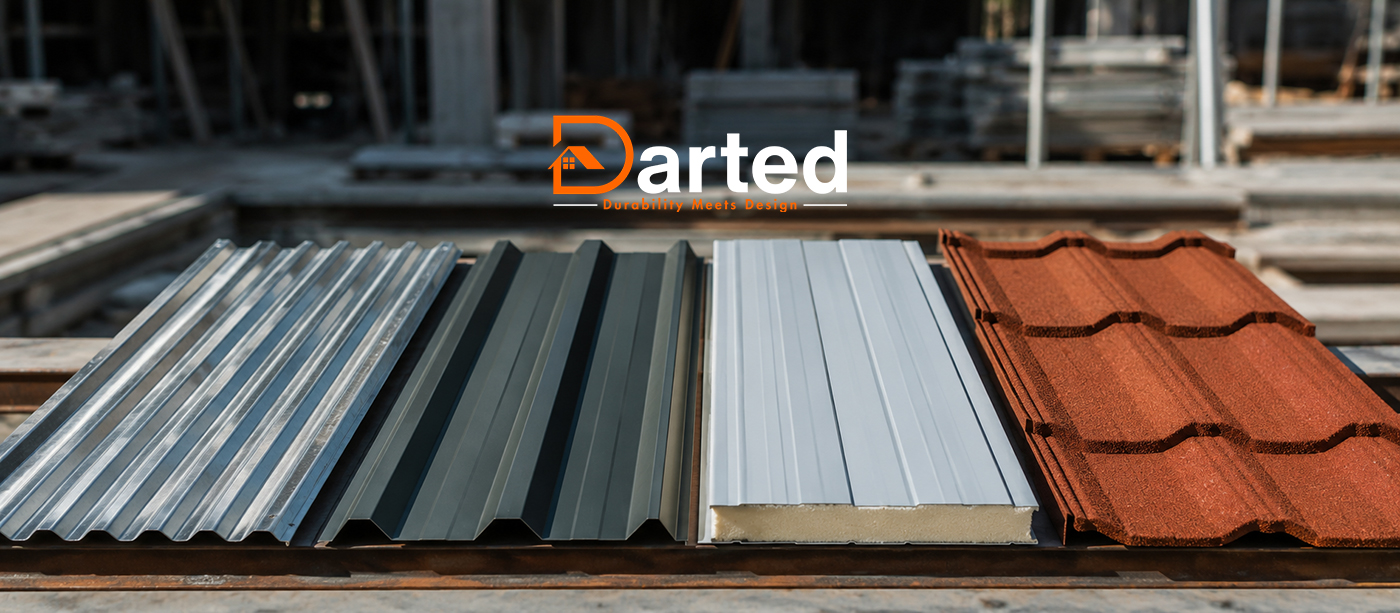
In short: The most common metal roofing sheet types in India are corrugated GI sheets, trapezoidal profile sheets, insulated sandwich panels, and stone coated steel tiles each suited to a different budget and building type.
1. Corrugated GI Sheets
The classic wavy-profile sheet you see on sheds, warehouses, and older homes. Cheap, widely available, and easy to install. Downside: shorter lifespan (10-15 years) and higher rust risk if the coating gets scratched during installation.
2. Trapezoidal Profile Sheets
Similar to corrugated but with sharper, box-like ridges. These handle wind and structural load better, which makes them popular for industrial sheds and larger commercial roofs.
3. Insulated Metal Sandwich Panels
Two metal skins with an insulating foam core in between. Great for factories, cold storage, and homes in extreme heat zones like Rajasthan, where you want the roof to actually block heat, not just shed rain.
4. Stone Coated Steel Tiles
A steel base coated in acrylic resin and natural stone chips, shaped to mimic clay or slate tiles. Costs more upfront but delivers a premium look, strong durability (30-50 years), and low maintenance, a good fit for residential homes where appearance matters.
Expert tip: Don’t assume “metal roofing” means one product. The gap in price, lifespan, and performance between a basic corrugated sheet and a stone coated steel tile is huge. Match the type to the building, not just the budget.
Sheet Sizes and Thickness Explained
In short: Metal roofing sheets in India commonly come in widths of 1 to 1.25 meters (with a smaller effective coverage width after overlap) and lengths custom-cut to your roof, while thickness is measured in gauge or millimeters, typically 0.35mm to 0.6mm for residential use.
A few numbers worth knowing:
- Width: Most sheets are manufactured around 1-1.25m wide, but the actual usable coverage is less once you account for overlap between panels.
- Length: Almost always custom-cut to your roof slope length, so you avoid unnecessary horizontal joints.
- Thickness (gauge): Thinner sheets (0.35mm-0.40mm) suit light residential use. Go thicker (0.50mm-0.60mm) for industrial sheds, high-wind coastal areas, or anywhere hail is a concern.
Common mistake: Buyers sometimes choose the thinnest, cheapest gauge available to save money upfront, then deal with dents, oil-canning (visible wavy distortion), or early wear within a few years. Thickness is not the place to cut corners.
How to Choose the Right Type for Your Roof
Ask yourself these four questions before you buy:
- What’s the building used for? Residential homes benefit from stone coated steel or quality trapezoidal sheets. Industrial sheds can often use simpler corrugated or trapezoidal GI sheets.
- What’s the climate like? Coastal and high-rainfall regions need higher corrosion resistance (galvalume or stone coated). Hot, dry regions like Rajasthan and Haryana benefit from insulated panels or reflective coatings.
- What’s the roof slope and structure? Steeper slopes shed water faster and give you more flexibility in sheet choice. Very low-slope roofs need sheets rated for that specific pitch.
- What’s your budget over the roof’s lifetime, not just today? A cheaper sheet that needs replacing in 12 years often costs more long-term than a pricier one that lasts 40.
Common Mistakes When Selecting Sheets
- Choosing purely on upfront price without factoring in lifespan
- Ignoring local wind-load and corrosion requirements
- Mixing incompatible fasteners or flashing with the sheet type
- Skipping insulation in extreme heat or cold regions
- Not confirming warranty terms before purchase
Cost Snapshot by Type
| Sheet Type | Relative Cost | Typical Lifespan | Best For |
| Corrugated GI | Low | 10-15 years | Sheds, budget builds |
| Trapezoidal | Low-Moderate | 15-20 years | Industrial, commercial |
| Insulated Sandwich Panel | Moderate-High | 20-30 years | Factories, extreme climates |
| Stone Coated Steel | Moderate-High | 30-50 years | Residential homes |
For an exact price breakdown by state and region, check our detailed cost guide.
Frequently Asked Questions
What is the standard size of a metal roofing sheet?
Most metal roofing sheets in India are manufactured around 1 to 1.25 meters wide, though the effective coverage width is slightly less once panels overlap during installation. Length is almost always custom-cut to match your specific roof slope, which avoids unnecessary joints and reduces leak risk. Always confirm exact dimensions with your supplier before ordering, since profile designs can affect usable width.
What thickness of metal roofing sheet should I choose?
For residential roofs, 0.35mm to 0.45mm gauge is generally sufficient. Industrial buildings, coastal areas, or regions prone to hail and heavy storms should use thicker sheets, typically 0.50mm to 0.60mm. Thicker sheets resist denting, oil-canning, and long-term wear better, and while they cost more upfront, they usually reduce repair and replacement costs over the roof’s life.
Which type of metal roofing sheet lasts the longest?
Stone coated steel roofing sheets typically offer the longest lifespan among common metal roofing types, often lasting 30 to 50 years with proper installation and maintenance. Insulated sandwich panels come next, especially in demanding climates. Basic corrugated GI sheets have the shortest typical lifespan, usually 10 to 15 years, mainly because of thinner gauge and less corrosion protection.
Are metal roofing sheets good for hot Indian climates?
Yes, particularly insulated sandwich panels or sheets with reflective or stone coatings. Plain, uncoated corrugated sheets can get quite hot to the touch and transfer heat into the building below. In hot regions like Rajasthan, Haryana, and Uttar Pradesh, pairing metal roofing with proper insulation or a reflective coating makes a meaningful difference in indoor comfort.
Can I install metal roofing sheets over an existing roof?
In many cases, yes, provided the existing structure can bear the added weight and the surface is properly prepared. However, this depends on your roof’s condition, local building codes, and the specific sheet type being installed. It’s best to have a qualified roofing contractor inspect your existing roof structure before deciding, since skipping this step is a common cause of installation problems.
Not Sure Which Sheet Type Fits Your Roof?
Every roof is different, and picking the wrong type usually shows up as a problem years later, not immediately. Get a free consultation with our team; we’ll assess your building type, climate, and budget, and recommend the sheet that actually fits, not just the one that’s easiest to sell.